
Capturing Truth | Photojournalism Of The Vietnam War
“He went to war the way other people go to the office.”
- A.P. Chief Editor Horst Faas describing photographer Henri Huet,
who died in a helicopter shoot-down over Laos in 1971.
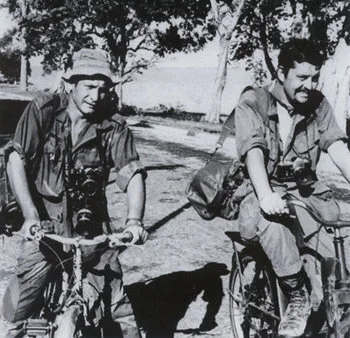
Richard Pyle | Associated Press - Henri Huet, left, and Richard Pyle, A.P.’s Saigon bureau chief, on bicycles in Cambodia. 1970.
The Vietnam War represents the “Big Bang” - or more aptly “The Big Flash” - for our idolisation of photographers.
The striking images sent around the world by the War Photographers captured the moments of conflict those at home weren’t meant to see.
Moments that proved the enemy wasn’t alien. They were human too.

Gilles Caron | Fondation Gilles Caron
Amongst the cascade of M1 Grand’s, AK-47’s, and M16’s - the photojournalist’s weapon of choice was a 35 millimetre camera.
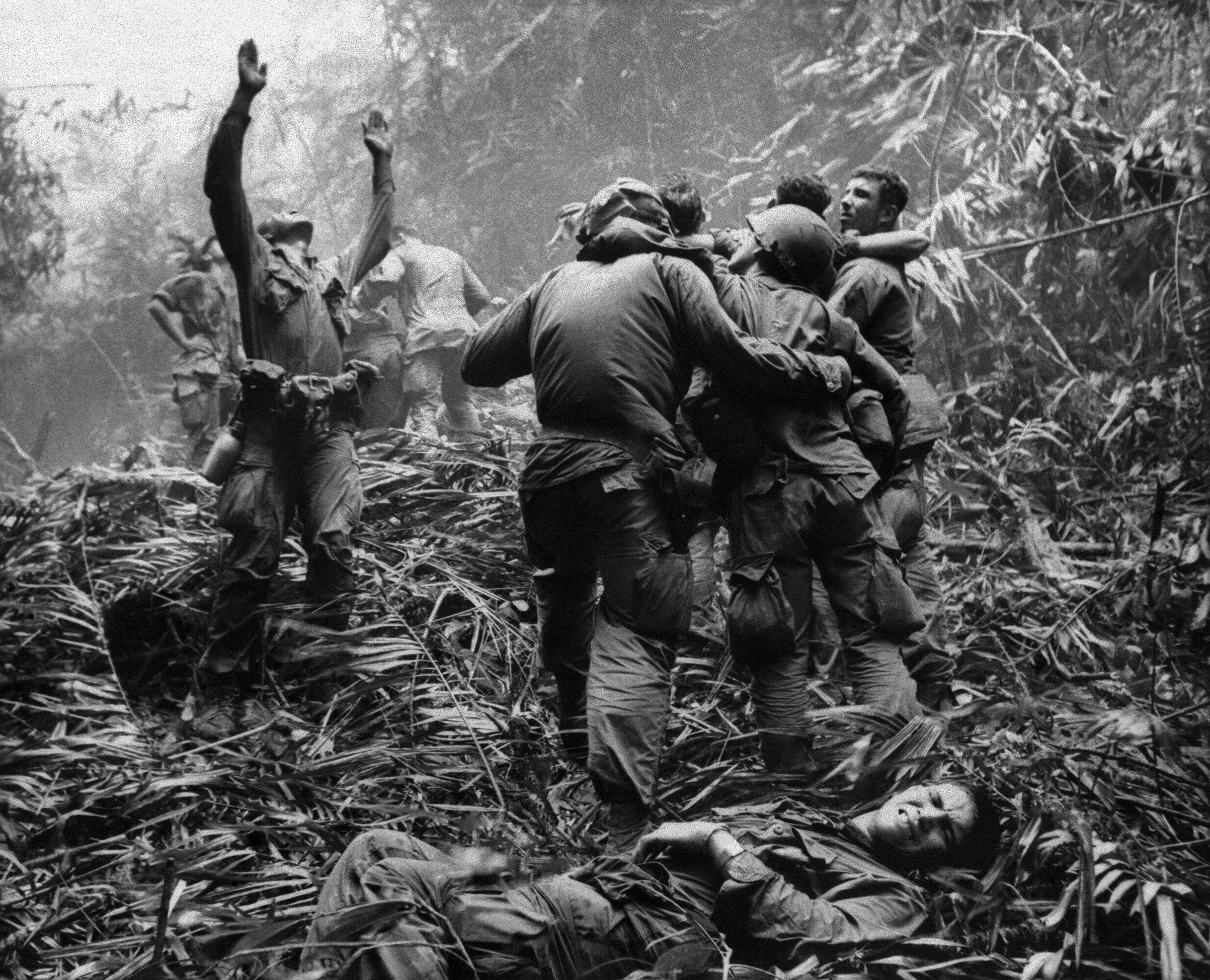
Art Greenspon - AP
Perhaps, against the odds, it was only ever going to be the truth that could end the war in Vietnam.
And the truth can’t hide from the lens.
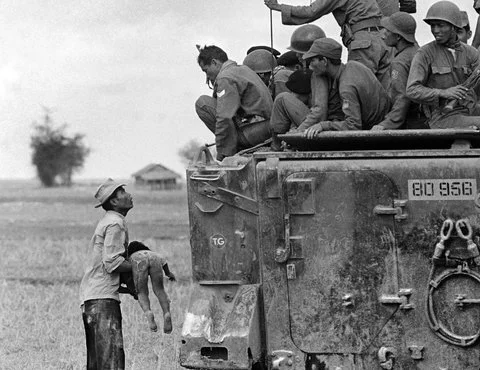
Horst Faas/Associated Press A farmer helplessly held the body of his dead child as South Vietnamese troops looked on.This photograph was included in a portfolio that received the 1965 Pulitzer Prize.
Until the Vietnam War - or the American War to the Vietnamese - Joe Rosenthal’s iconic image of G.I.’s raising the American Flag on Iwo Jima was the symbolic image of Allied Victory in WWII.
War Photography as Hollywood liked it.
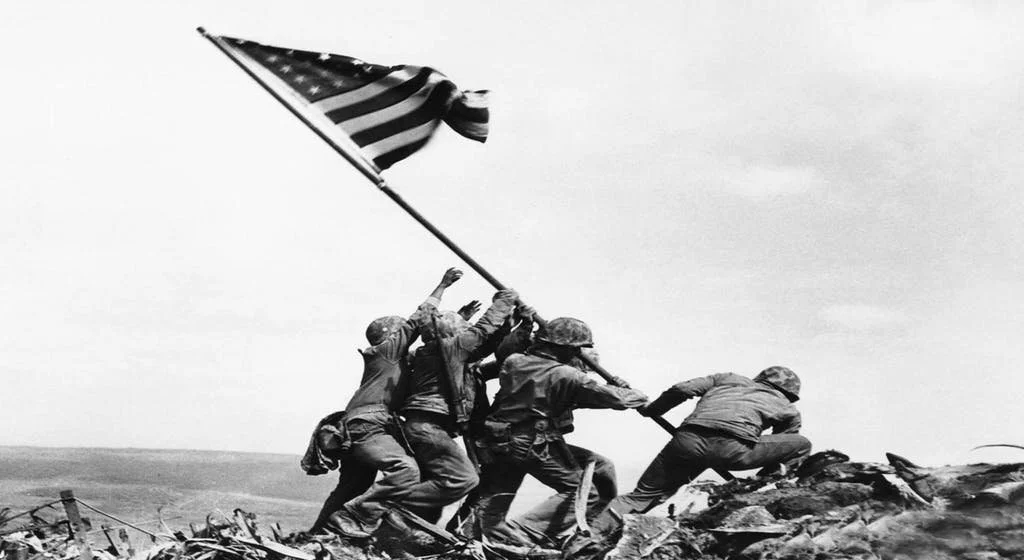
Joe Rosentha | National Geogtraphic
It also embodied the dawn of American Exceptionalism.
The “A Picture Speaks A Thousand Words” equivalent of “The Victors Write The History Books“.
This glorious illusion would only last two decades.
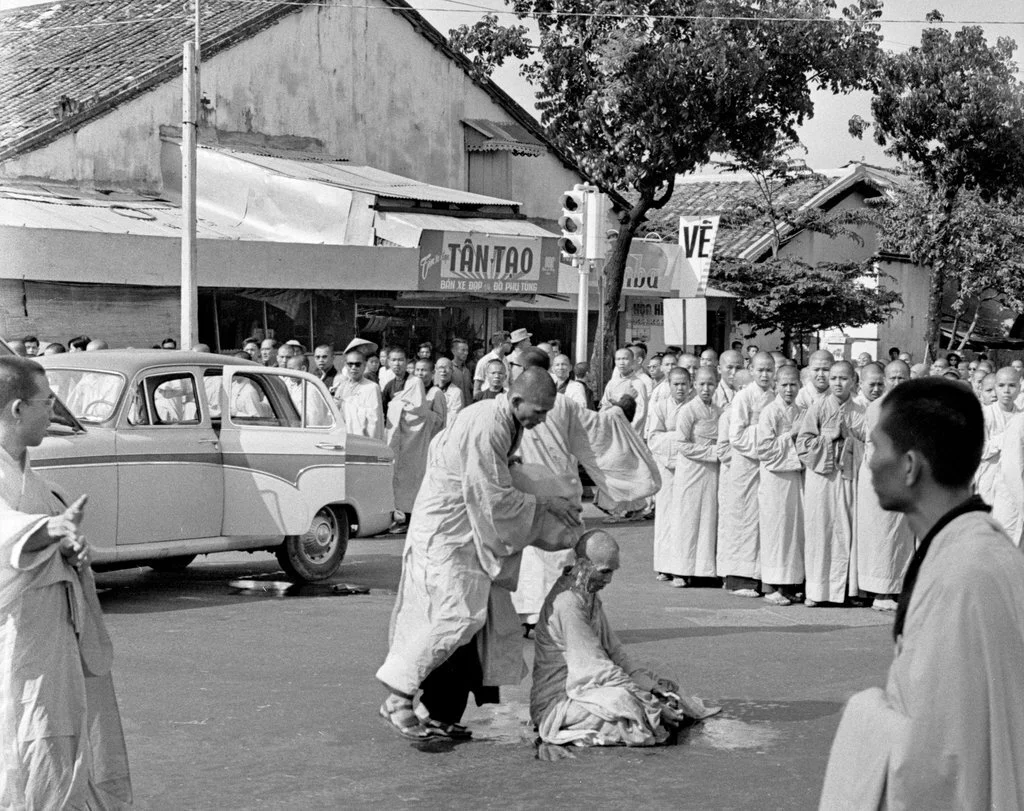
Malcom Browne | Thich Quang Duc moments before he set himself on fire
Vietnam was an old fashioned colonial war fought with high tech weaponry against a peasant population by a Superpower intoxicated with its own might and virtue.
This collided head on with a vivid, fast moving mass media with a moralising viewership to appease.
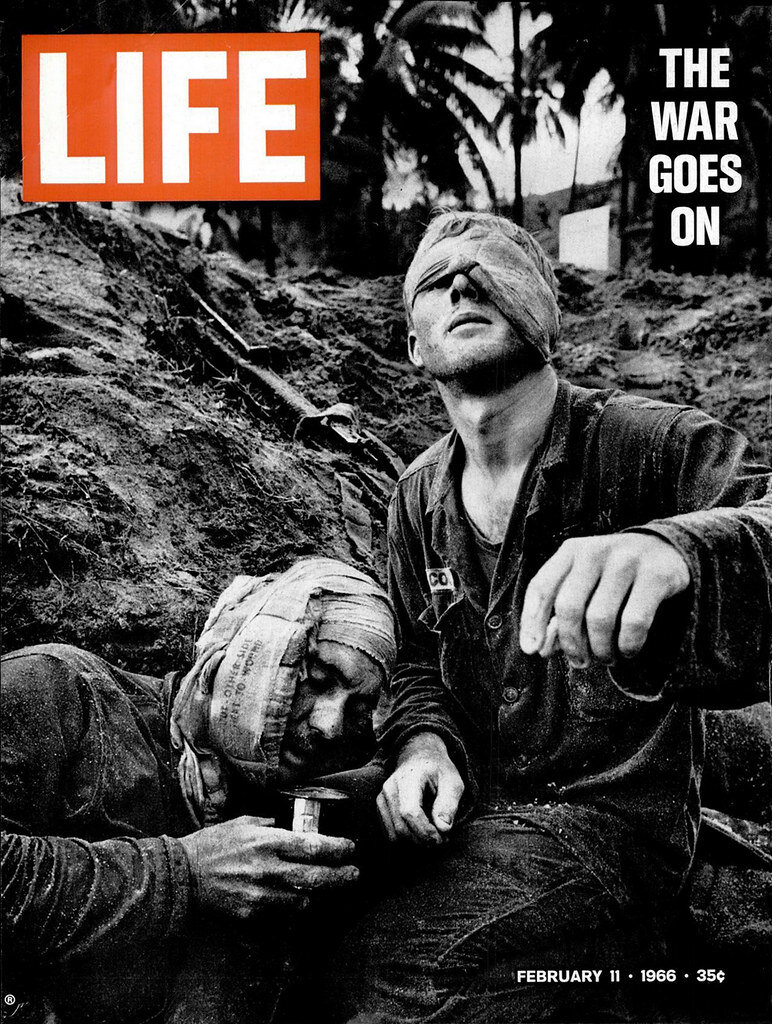
Henri Huet | Front Cover of Life Feb 1966
Naturally, the intuition of Waring Powers is to keep the personal opinion of reporters from getting anywhere near a typewriter.
Their blank cheque on injustice is exactly how Army Majors can come up with Orwellian Double Speak like:
“It became necessary to destroy the town to save it.”
There’s only one weapon that can confront inverted logic. Reality.
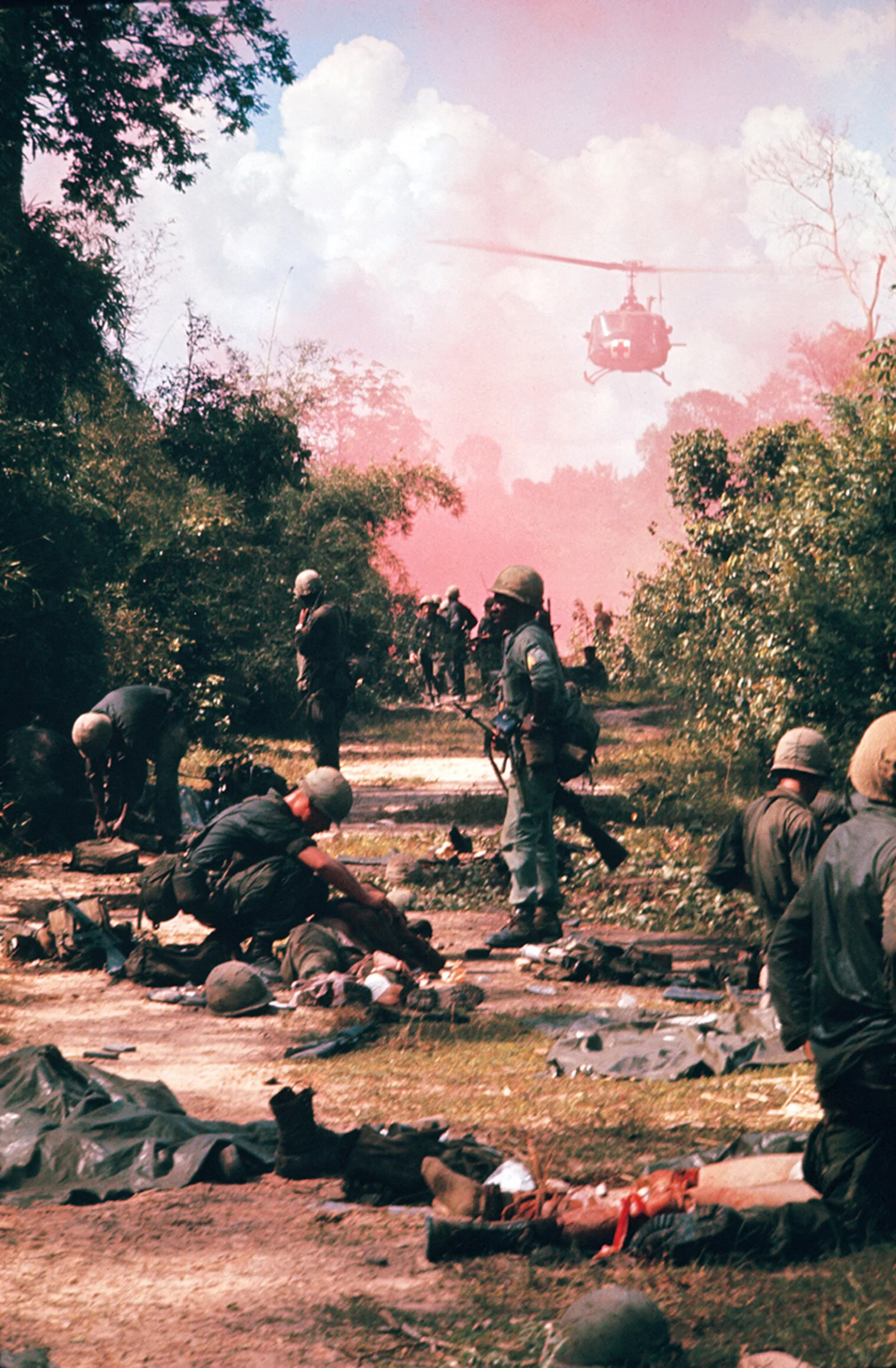
Tim Page | War Zone ‘C’ – Ambush of the 173rd Airborne, 1965
War Photographers, more than journalists and news anchors, had an artistic medium that could slip behind the ego of the viewer.
Imagery doesn’t have to contend, compete or wrestle with someones bias. It just is.
Nakedly portraying the graphic scene on the ground was largely down to the efforts of the Associate Press, lead by it’s chief editor Horst Faas.
They led an epoch defining revolution in photography and journalism.
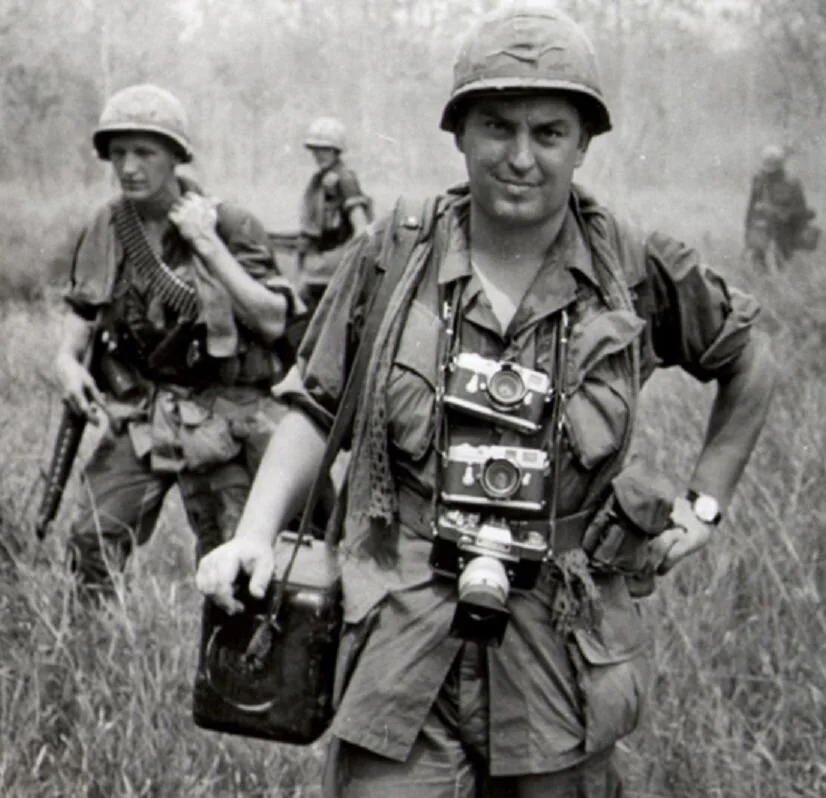
Horst Faas | AP
Faas was a media mogul in War Correspondent’s clothing.
He recognised the intersection of light, hand held cameras in an increasingly visual media age.
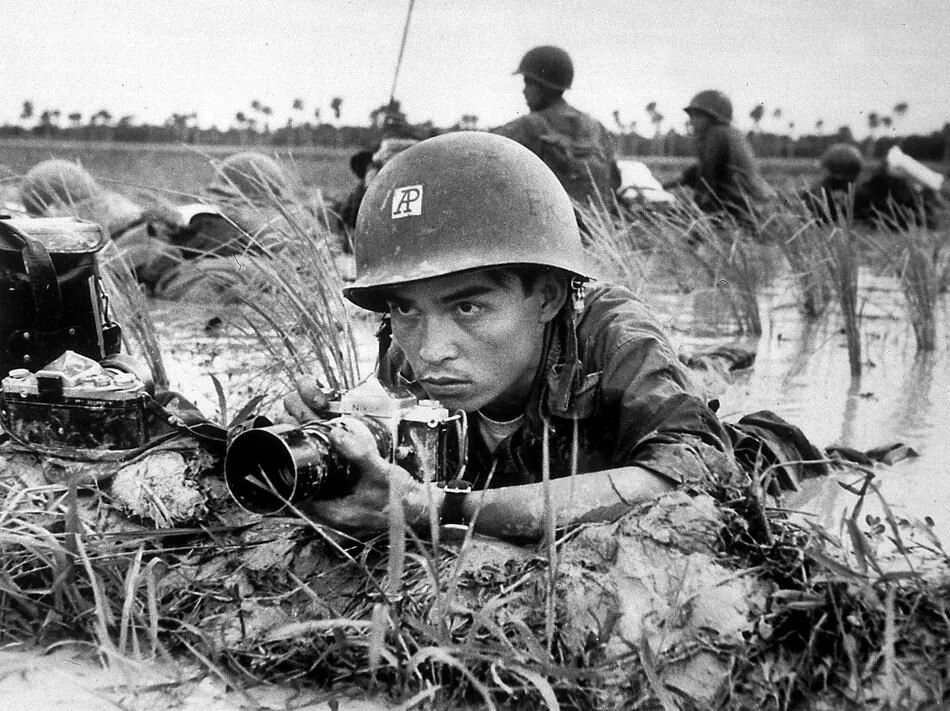
Hence, he not only insisted every journalist train in the art of photography, but also that no journalist leave the house without one.
He even gave Saigon’s street photographers free film - and paid in USD - to harness a camera-wielding mercenary force known as Horst’s Army.
Pintrest
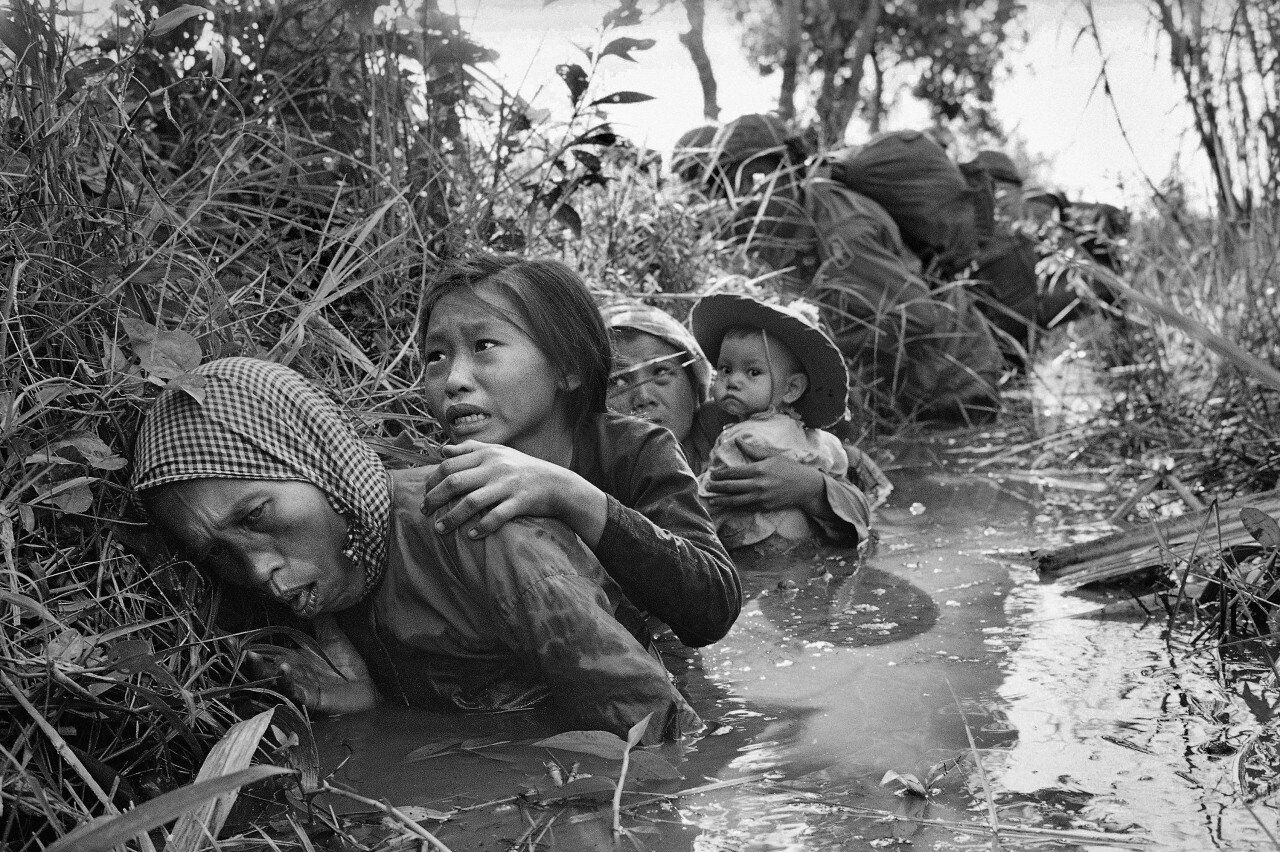
They could provide angles and trust beyond the foreign correspondent’s cultural access.
Horst Faas | AP
At first, soldiers treated War Photographers with scepticism.
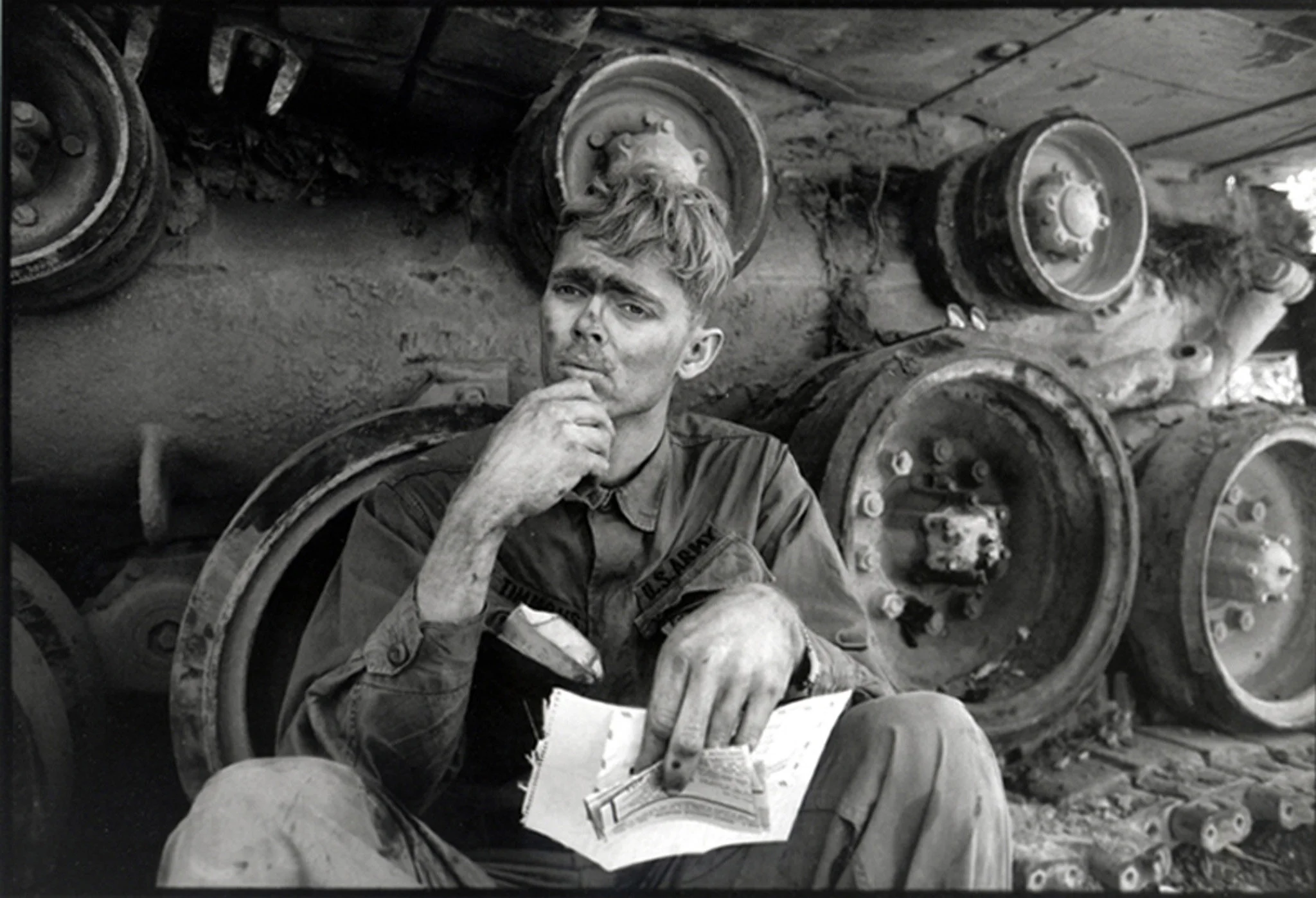
But this steadily evaporated as a mutual respect arose. Their presence in hell, unlike the G.I.’s, wasn’t compulsory. It was a choice.
“Tell the world what is happening here, please. It may be my only ticket home”
David Burnett | Contact Press Images
The Photo To End All Wars
Maybe, just maybe - if they caught and captured a glimpse into the depths of hell, and showed the world, peace could be restored.
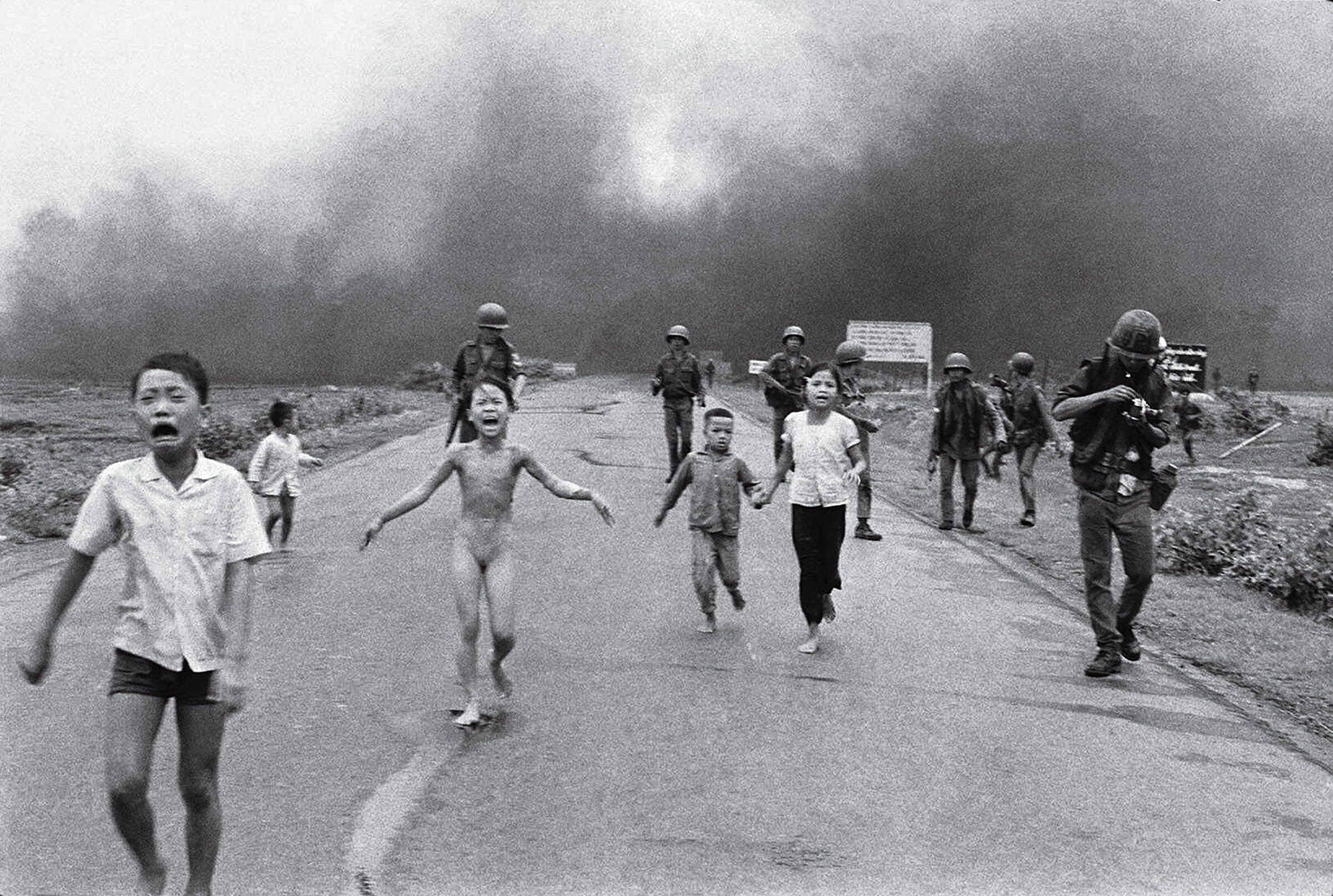
This was the drive of Nick Ut, the AP photographer who captured the Pulitzer Prize wining photo Naked Girl:
“My older brother Huynh Thanh My, who was killed covering the Vietnam War for the Associated Press, always told me that an image could stop the war and that was his goal…
I decided to follow in his footsteps and complete his mission. A few years later on that fateful day in 1972 on the Trang Bang road, my brother’s goal was accomplished. No one was expecting people to come out of the bombed-out burning buildings, but when they did, I was ready with my Leica camera and I feel my brother guided me to capture that image. The rest is history.”
Nick UT | AP
The Gung-ho bravery of these unarmed civilians - facing a barage of bullets that takes no prisoners and an enemy that makes no distinctions - cannot be understated.
Only a combination of wild Wanderlust, Artistic endeavour and a sacrificial pursuit of Justice can explain such madness.
The often wounded photographer Tim Page, described Vietnam as:
“the ultimate in experience, laden with a magic, a glamorous edge that no one who went through it can truly deny.”
With every photograph came unmistakable, un-fakable raw emotion.
A photographers sardonic dream.

Larry Burrows | The Life Picture Collection
Being confronted with the vacuousness of your own high esteemed rhetoric is an existential crisis of its own.
The stubbornness of the American military meant they were wedded to outdated truths to justify their actions.
Greed and ego had a blood debt that racked up a death toll in a far off land where life was cheap.
That’s exactly why Photojournalists were not out of place in the war zone. Indeed, they were soldiers in their own right, combating an enemy just the same.
Perhaps photographer Peter Hamil described it best, as chasing:
“The thing that mattered most … the truth. The elusive, frustrating truth.”
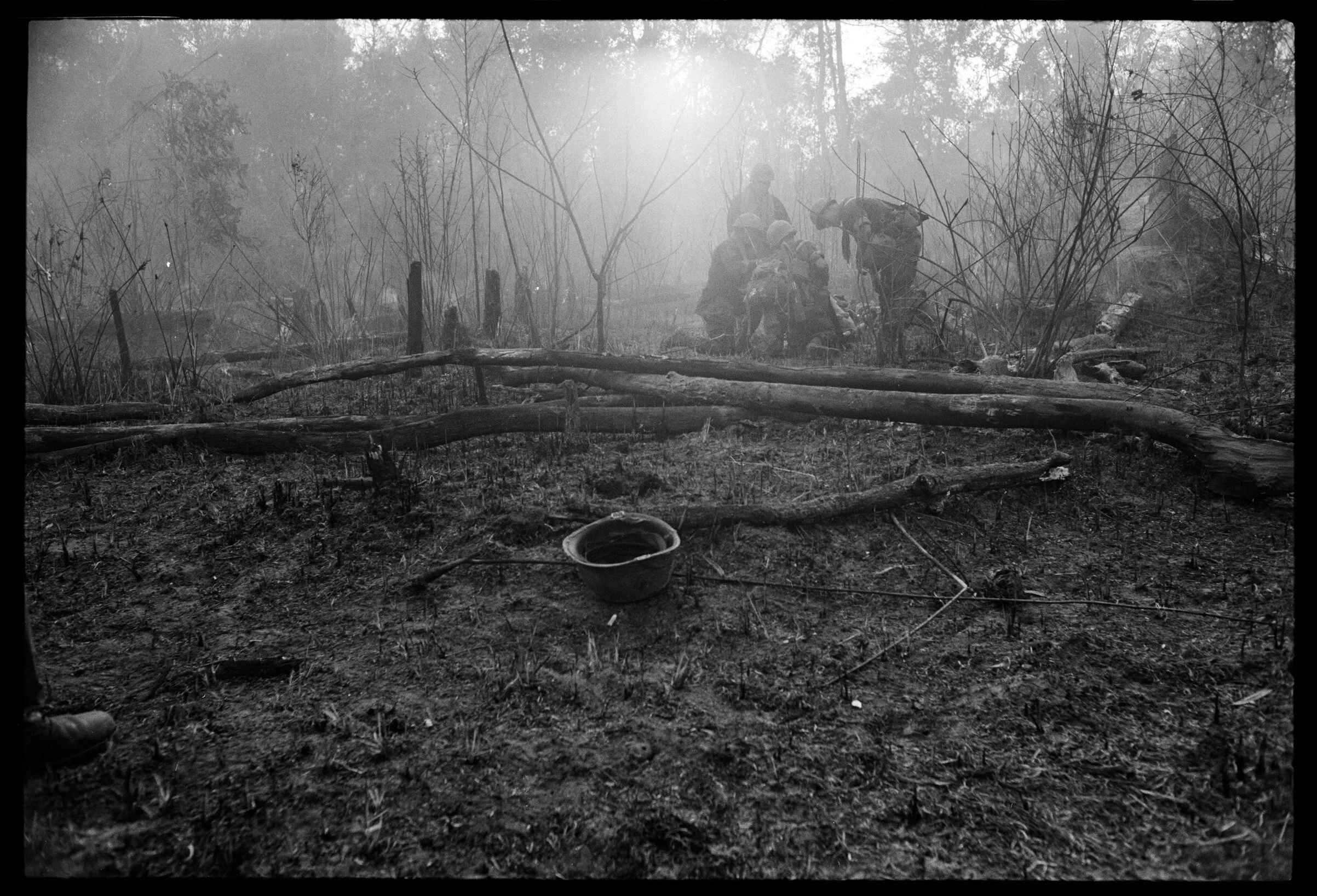
Catherine Leroy | Dotation Catherine Leroy